
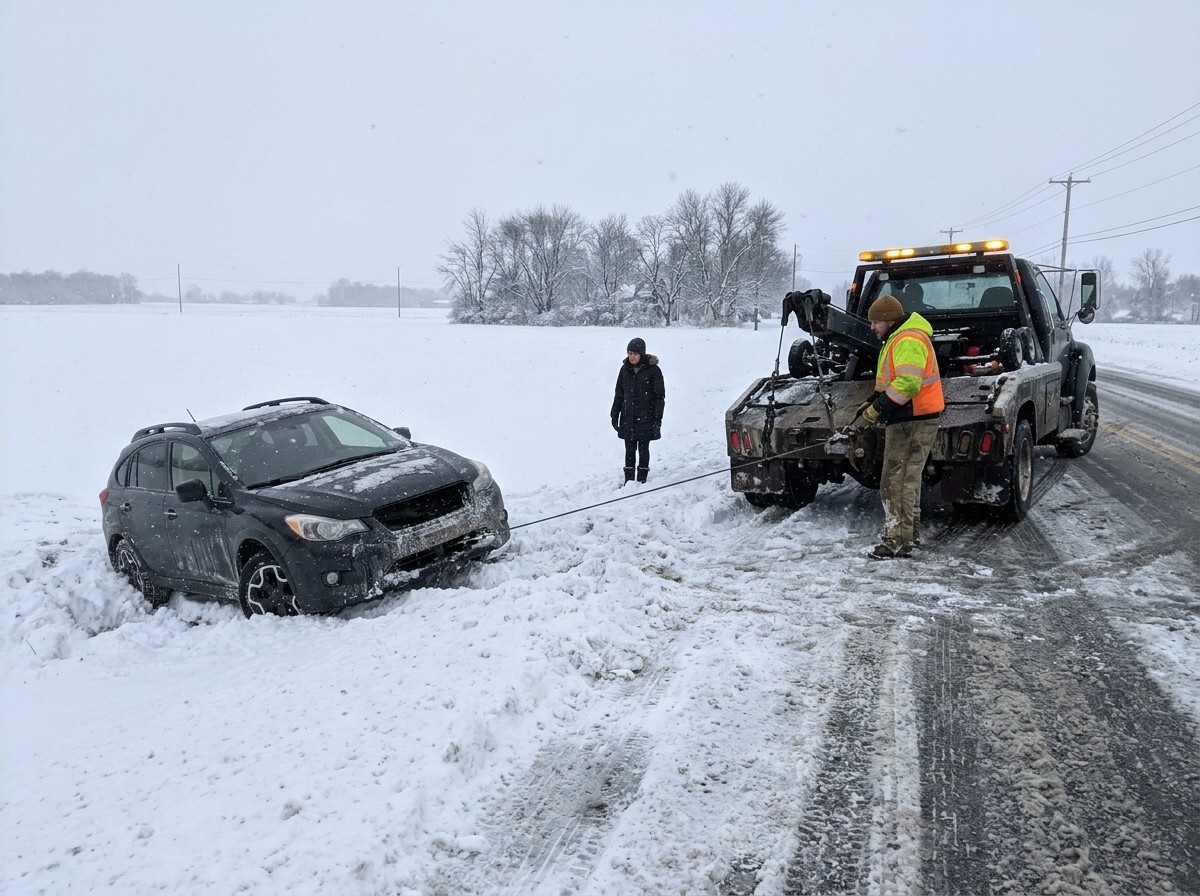
Category: Towing Tips

  • Heavy Duty Towing for Semi-Trucks: What Makes It Different and Why It Matters

    Heavy Duty Towing for Semi-Trucks: What Makes It Different and Why It Matters

    When a semi-truck breaks down on the highway, the clock starts ticking right away: on your delivery schedule, your cargo, and the safety of everyone on the road around you. But calling just any towing company isn’t the answer. Semi-trucks are among the heaviest, longest, and most complex vehicles on the road, and towing one safely requires specialized equipment, trained operators, and a clear understanding of what the job actually involves. This guide walks through what makes heavy duty towing for semi-trucks different from standard towing, what the process looks like from the moment you call to the moment your rig is moving again, and why choosing the right towing company matters more than most drivers realize until they’re already in the situation.

    Short answer: A semi needs a heavy duty wrecker, not a standard tow truck. Call early and give your exact location, the truck and trailer type, whether it’s loaded and roughly how heavy, and what happened. Some calls are simple tows; rollovers and slide-offs need recovery first. Call (716) 923-7804, 24/7.

    Step 1: Understand Why a Standard Tow Truck Can’t Handle a Semi

    The first and most important thing to understand is that a standard light duty tow truck, the kind that handles passenger cars, SUVs, and small pickups, is simply not built for a semi-truck. The weight alone tells the story: a fully loaded tractor-trailer can weigh up to 80,000 pounds, while a standard light duty tow truck is typically rated for a fraction of that. Attempting to tow a semi with an undersized truck doesn’t just risk damaging the vehicle. It risks a serious accident. The rigging, the lifting capacity, the braking system, and the overall structural rating of a heavy duty tow truck are built to a completely different standard than what you’d find on a standard tow truck. This is why calling a company that specifically offers heavy duty towing, not just general towing, is the only safe option when your semi goes down.

    Step 2: Know What Heavy Duty Towing Equipment Actually Involves

    Heavy duty tow trucks come in several configurations, and the right one for your situation depends on what’s happened to your semi and where it is. A heavy duty wrecker is built for recovery situations, rollovers, jackknifed trailers, vehicles in ditches, where the truck needs to be righted or winched before it can be towed. A heavy duty rotator is a more specialized piece of equipment used in complex recoveries where the tow truck itself needs to rotate to reach and manage a vehicle in a difficult position. A heavy duty underlift or wheel-lift setup handles more straightforward towing where the semi is upright and accessible. Understanding these differences matters because it means a qualified heavy duty towing company will assess your specific situation and dispatch the right equipment, not just the nearest available truck.

    Step 3: Call Early and Give the Right Information

    One of the most common mistakes semi-truck drivers make during a breakdown is waiting too long to call for help, or calling without the right information ready. Every minute a semi sits on a highway shoulder creates additional risk, for the driver, for other road users, and for the cargo. As soon as your truck is safely off the travel lane with hazard lights on, make the call. When you do, have the following ready:

    • Your exact location: mile marker, exit number, or nearest highway sign
    • Whether it’s a cab-only breakdown or a full tractor-trailer
    • Whether the trailer is loaded or empty, and an approximate weight if you know it
    • A description of what happened: mechanical failure, tire blowout, accident, etc.
    • Whether the truck is upright and accessible or in a more complex position

    This information allows the towing company to dispatch the right equipment and crew the first time, rather than arriving on-site unprepared and having to send for additional resources.

    Step 4: Understand the Difference Between Towing and Recovery

    Not every semi-truck breakdown is a straightforward tow. There’s an important distinction between towing, moving a vehicle that is upright, accessible, and ready to be transported, and recovery, which involves getting a vehicle into a towable position first. A jackknifed trailer blocking two lanes of I-90, a rolled-over truck in a ditch, or a semi that has gone off the road onto soft ground all require recovery before towing can even begin. Recovery involves additional equipment, additional time, and additional expertise. When you call for help, describing your situation as accurately as possible helps the towing company determine immediately whether this is a tow, a recovery, or both, and plan accordingly.

    Step 5: Know What Happens to Your Trailer and Cargo

    Towing a full tractor-trailer involves more moving parts than towing the cab alone. In many situations, the trailer needs to be handled separately, either towed independently or dropped at a secure location while the cab is dealt with first. If your trailer is loaded, cargo security becomes an immediate concern, both during the recovery process and while the trailer sits waiting. Let the towing company know upfront whether you have a loaded trailer attached, so they can plan the right approach. Notifying your dispatcher at the same time allows your company to arrange cargo transfer or an alternative trailer if the situation requires it.

    Step 6: Choose a Heavy Duty Towing Company You Can Trust

    Not every company that advertises towing can actually handle a semi-truck safely. When evaluating a heavy duty towing company, ideally before you ever need one, not while you’re sitting on the shoulder of I-90, look for a company that specifically lists semi-trucks, tractor-trailers, and large commercial vehicles as part of their service offering, operates proper heavy duty equipment rather than standard tow trucks, and has operators with real experience handling large commercial vehicle recoveries. Having a reliable heavy duty towing company’s number saved before a breakdown happens is one of the simplest and most practical things a long-haul driver or fleet manager can do.

    Moss Heavy Duty Towing provides heavy duty towing for semi-trucks and tractor-trailers across Erie County, covering major corridors like I-90, I-190, Route 33, and the Peace Bridge border crossing, with the equipment and experience to handle both straightforward tows and complex recovery situations.

    Common Reasons Semis Need a Heavy Tow

    • Engine or transmission failure on the highway
    • Air brake or air line problems that lock up the brakes
    • Blown tires or wheel damage on a loaded trailer
    • Overheating on long climbs or in slow traffic
    • Slide-offs, jackknifes and rollovers in winter weather
    • Electrical problems that leave the truck unable to start or run

    Tell us which of these you’re dealing with, or simply describe what happened, and we plan the tow or recovery from there.

    We’re Ready When Your Semi Goes Down

    A semi-truck breakdown on the road doesn’t have to become a day-long ordeal. Knowing what makes heavy duty towing different, calling the right company early, and giving accurate information when you do gets your rig moving again as efficiently as possible. Moss Heavy Duty Towing responds to semi-truck and tractor-trailer breakdowns throughout Buffalo and Erie County, day and night. Call (716) 923-7804 for professional heavy duty towing.

    Frequently Asked Questions

    Can you tow a semi with a loaded trailer?

    Often, yes. Tell us what you’re hauling and roughly how heavy it is. Sometimes the cab and the trailer are moved separately.

    Do you handle rollovers and jackknifes?

    Yes. Those are recovery jobs: the truck is brought back upright or into a towable position first, then towed.

    Where will you take my truck?

    To your shop, a dealer, your yard or another place you choose.

    Are you open 24/7?

    Yes. Call (716) 923-7804 any time, day or night, weekends and holidays.

    Related Services

    Semi Down? Call Dispatch.

    (716) 923-7804, 24/7. Or send a quote request and we’ll call you back.
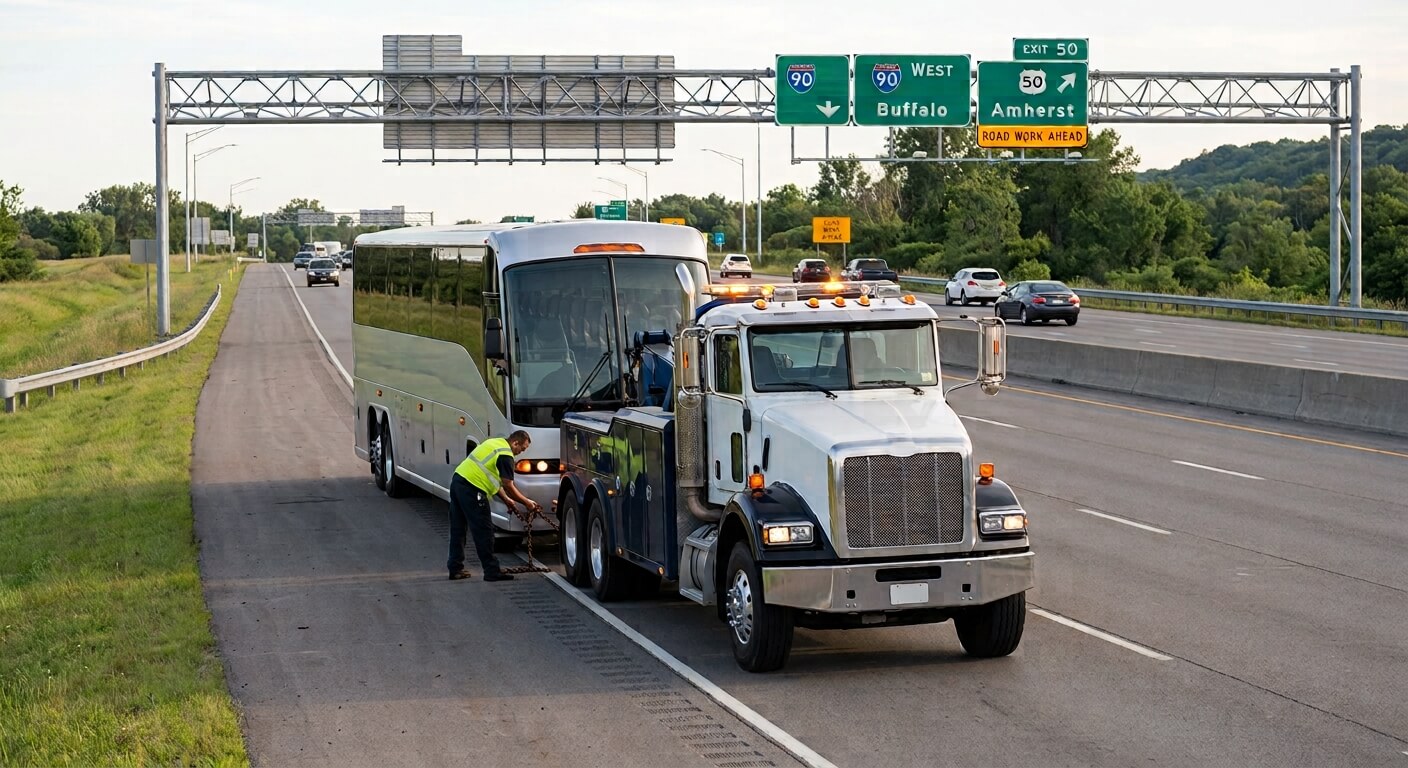

  • Bus Breakdown on the Road: What Drivers and Fleet Managers Need to Know

    Bus Breakdown on the Road: What Drivers and Fleet Managers Need to Know

    A bus breakdown is one of the most demanding roadside situations a driver or fleet manager can face. Unlike a car or even a box truck, a bus carries passengers, and that changes everything about how the situation needs to be handled. From getting passengers to safety to calling the right towing company for a vehicle of that size, every decision matters. Whether you’re operating a charter bus, a tour vehicle, or a private fleet bus in the Buffalo and Erie County area, this FAQ covers the most important questions drivers and fleet managers ask when a bus goes down on the road.

    Short answer: Stop as far off the road as you can, hazards and triangles out, and keep passengers safe: on the bus if traffic is close, or in a safe spot nearby if the bus is well clear. Tell your dispatcher so a relief bus can be sent, and call a heavy duty tow company. Call (716) 923-7804, 24/7.

    What’s the first thing a bus driver should do when the bus breaks down?

    Passenger safety comes before anything else. If the bus is still movable, get it as far off the travel lane as possible, onto the shoulder, into a parking lot, or onto a side street. Turn hazard lights on immediately and keep them on. Once the bus is stopped in the safest position available, assess whether passengers need to exit the vehicle or whether it’s safer to keep them on board. On a busy highway like I-90 or I-190, keeping passengers seated inside the bus is often safer than having them stand on a narrow shoulder near high-speed traffic.

    Should passengers stay on the bus or get off?

    It depends on the situation and where the bus is stopped. If the bus is fully off the road on a wide shoulder or in a safe area, controlled, orderly disembarkation may be appropriate, especially if there’s a mechanical issue that poses a risk to passengers inside. If the bus is on a highway shoulder, in a tunnel, on a bridge, or in any location with active traffic nearby, keeping passengers seated and buckled is generally the safer call until emergency services or a relief vehicle arrives. Never allow passengers to stand near the rear of the bus or on the traffic side of the vehicle.

    What information should a driver have ready when calling for help?

    The more specific you can be, the faster the right help gets dispatched. Have the following ready:

    • Exact location: mile marker, exit number, cross street, or nearest landmark
    • Direction of travel
    • Bus type and approximate passenger capacity
    • Number of passengers currently on board
    • A brief description of what went wrong: mechanical failure, tire blowout, overheating, electrical issue, etc.
    • Whether the bus is fully off the road or partially blocking a lane

    Can a standard tow truck handle a bus?

    No. Buses are heavy, long vehicles that require specialized towing equipment and operators trained to handle their size and weight. A standard light duty tow truck is not rated for a bus, and attempting to tow one with undersized equipment risks serious damage to the vehicle’s frame, drivetrain, or undercarriage. When you call for towing, make sure the company you contact has heavy duty towing capability and experience with large commercial vehicles, not just passenger cars and pickups.

    Moss Heavy Duty Towing provides heavy duty towing for buses across Erie County, equipped with the right trucks and operators to handle these vehicles safely.

    What should fleet managers do when a driver reports a breakdown?

    Fleet managers play a critical role in coordinating the response from off-site. As soon as a breakdown is reported, the priority list looks like this, confirm the driver and passengers are safe, get the exact location, dispatch towing, arrange a relief bus or alternative transport for passengers if needed, and notify any relevant parties such as tour organizers, school administrators, or event coordinators depending on the type of service being run. Having a clear breakdown response protocol in place before an incident happens makes all of this significantly faster and less stressful when it does.

    What if the bus breaks down with a full passenger load?

    A full passenger load adds urgency to the situation on two fronts, passenger welfare and the logistics of getting everyone where they need to go. Contact your dispatcher immediately so a relief vehicle can be arranged. If passengers need to wait outside the bus in cold weather, rain, or extreme heat, getting them into a safe covered area nearby, a rest stop, a gas station, or a nearby building, is a priority while transport is arranged. Never leave passengers unattended on a highway shoulder.

    What if the breakdown happens on a highway like I-90 or I-190?

    Highway breakdowns with a bus are high-priority situations. The combination of high-speed traffic, limited shoulder space on some sections, and a large stationary vehicle creates serious hazards for everyone involved. If you break down on I-90, I-190, or Route 33, call for towing immediately and consider notifying law enforcement as well, since police can help manage traffic flow and provide additional visibility around the scene. Keep all passengers inside the bus and away from the traffic side of the vehicle until help arrives.

    How is towing a bus different from towing a regular truck?

    Buses have a different weight distribution, wheelbase, and frame structure than a standard commercial truck. The passenger compartment adds both weight and complexity to the recovery process, and the length of the vehicle affects how it can be safely hooked up and maneuvered in tight spaces. An experienced heavy duty towing operator will assess the bus’s position and condition before rigging it, rather than applying a one-size-fits-all approach. This is why calling a company with genuine heavy duty towing experience, not just one that says they can handle it, matters.

    What roadside assistance services might help before a tow is needed?

    Not every bus breakdown ends in a tow. Some situations can be resolved on the spot:

    • Dead battery: A jump start may get the bus running again if the issue is a drained battery rather than a deeper electrical problem.
    • Flat tire: If the bus has a usable spare and the situation is safe, a roadside tire change can get you moving again without a tow.
    • Out of fuel: A fuel delivery can resolve the situation quickly if running low on diesel or gas is the cause.

    If any of these apply to your situation, let the towing company know when you call. They can dispatch the right response without sending a full tow truck when it isn’t needed.

    A Simple Breakdown Plan for Fleets

    A short written plan saves time when a bus goes down. Keep a copy in every bus:

    1. Who the driver calls first, and the tow company’s number
    2. How the driver reports the location: route, direction, exit or cross street
    3. When passengers stay on board and when they move to a safe spot
    4. How a relief bus or other transport is arranged
    5. Who updates parents, riders or the customer
    6. Where the bus should be towed: your yard, shop or dealer

    Go over the plan with drivers once a season, and especially before winter.

    We’re Ready When Your Bus Goes Down

    A bus breakdown on the road in Buffalo or Erie County is a serious situation, but having the right towing company on call makes a real difference in how quickly and safely it gets resolved. Moss Heavy Duty Towing provides heavy duty towing for buses throughout Erie County, covering major routes like I-90, I-190, and Route 33, as well as local roads through Cheektowaga, Amherst, Tonawanda, West Seneca, Lackawanna, and Niagara Falls, day and night. Call (716) 923-7804 for professional heavy duty towing.

    Frequently Asked Questions

    Can you tow a school bus or a charter coach?

    Yes. Buses need heavy duty equipment rated for their weight and length. Tell us the type and length of the bus when you call.

    Can you tow the bus to our depot?

    Yes. Give us the address of your depot, shop or dealer.

    Are you open 24/7?

    Yes. Call (716) 923-7804 any time, day or night, weekends and holidays.

    Related Services

    Bus Broke Down? Call Now.

    (716) 923-7804, 24/7. Or send a quote request and we’ll call you back.
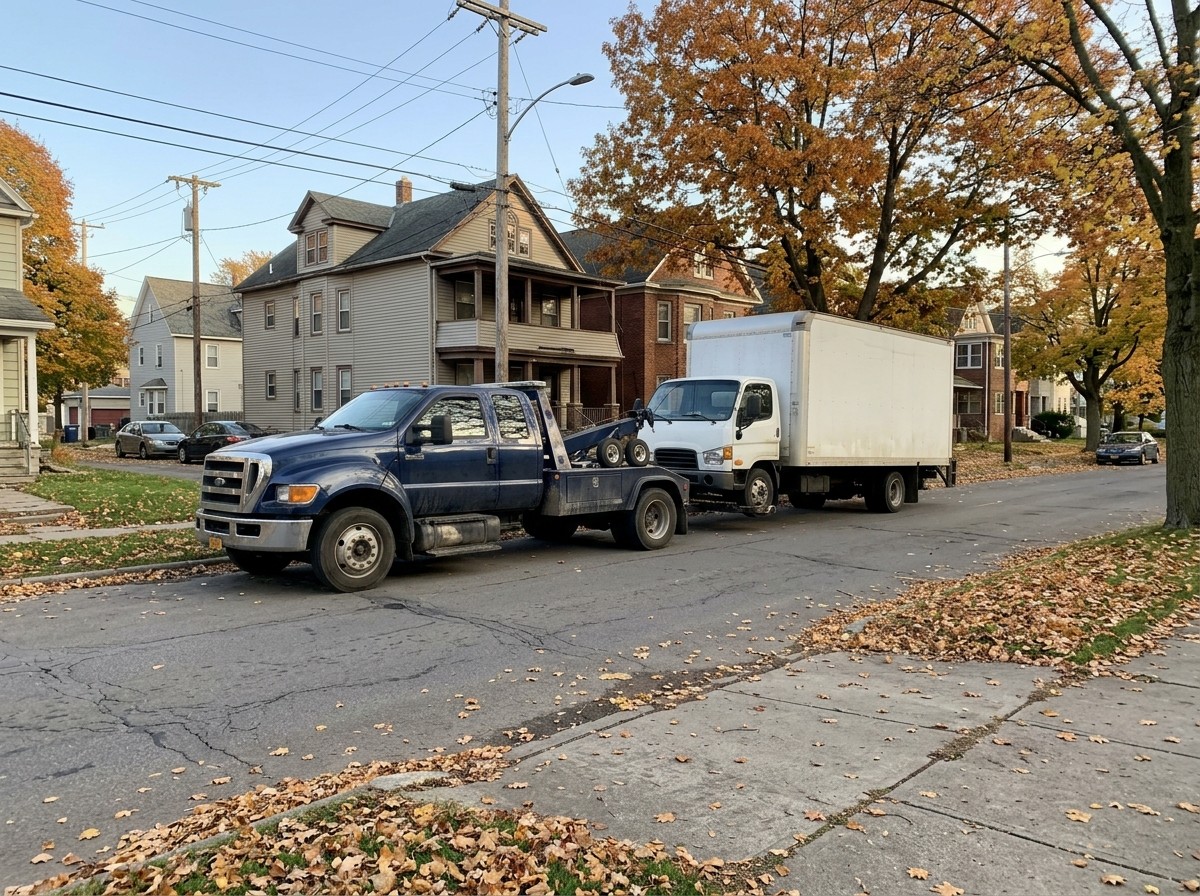

  • Box Truck Breakdown: What Delivery Drivers Need to Know

    Box Truck Breakdown: What Delivery Drivers Need to Know

    For delivery drivers, a box truck breakdown isn’t just an inconvenience. It’s a disruption to your entire route, your schedule, and potentially your cargo. Box trucks occupy a middle ground between standard passenger vehicles and full heavy-duty commercial rigs, which creates a specific set of challenges when something goes wrong on the road. Standard tow trucks often aren’t built for them, and the cargo inside adds another layer of complexity to any roadside situation. Whether you’re running deliveries across Buffalo, moving freight along I-90, or making local stops through Cheektowaga and Tonawanda, knowing what to do when your box truck breaks down can make the difference between a short delay and a much longer one.

    Short answer: Pull as far off the road as you can, hazards and triangles out, and tell your dispatcher. When you call for towing, give the truck’s size, approximate weight and whether it’s loaded. A flat tire, dead battery or empty tank can often be fixed on the spot; mechanical failures need a medium duty tow. Call (716) 923-7804, 24/7.

    Box Trucks Are Not Like Regular Vehicles

    One of the most common mistakes delivery drivers make during a breakdown is treating their box truck like a passenger car. Box trucks are heavier, taller, and wider than standard vehicles, which affects everything from how far off the road you need to get to how long it takes traffic to react to a hazard ahead. The cargo area at the rear adds both weight and blind spots, and depending on what you’re carrying, a breakdown can create additional concerns around cargo security, refrigeration, or time-sensitive deliveries. Understanding these differences is the first step to handling a breakdown safely and efficiently.

    Common Box Truck Breakdown Causes

    Box trucks take a beating on daily delivery routes, and certain problems come up more often than others:

    • Tire blowouts and flats: Box trucks carry significant weight, and tires under consistent load wear faster and are more prone to blowouts, especially on rough urban roads or during hot summer months.
    • Overheating: Stop-and-go delivery routes through Buffalo’s commercial districts put heavy demand on the engine, particularly in summer. Frequent idling while making deliveries adds to this.
    • Electrical and battery issues: Repeated short trips that don’t allow the battery to fully recharge are common in delivery work, and cold Buffalo winters accelerate battery wear significantly.
    • Brake issues: Loaded box trucks put heavy strain on braking systems, especially on routes with frequent stops or steep grades.
    • Transmission problems: Constant stop-and-go driving in urban delivery environments puts more wear on the transmission than highway driving does.

    What to Do Immediately After a Breakdown

    The first few minutes after a box truck breaks down are the most critical from a safety standpoint. Here’s what to do:

    First, if the truck is still movable at all, get it as far off the travel lane as possible, onto the shoulder, into a parking lot, or onto a side street if you’re on a local road. A stopped box truck in a travel lane blocks significantly more road than a passenger car and creates a serious hazard for other drivers. Turn your hazard lights on immediately, and set out reflective triangles or flares behind the vehicle if you have them.

    Once you’re in a safe position, assess the situation briefly, a flat tire, an overheating gauge, or a warning light can all give you useful information to relay when you call for help. Avoid attempting repairs on a busy road shoulder unless you’re dealing with something simple and you can do it safely away from traffic.

    Calling for the Right Help

    This is where box truck drivers often run into problems. Because box trucks sit between light duty and heavy duty classifications, not every towing company is equipped to handle them properly. A standard light duty tow truck may not be rated for the weight of a loaded box truck, and attempting to tow an overloaded vehicle with an undersized truck can cause damage to the frame or drivetrain. When you call for towing, be specific, give the towing company your truck’s size, approximate weight if you know it, and whether it’s loaded or empty. This ensures the right equipment gets dispatched the first time.

    Moss Heavy Duty Towing provides medium duty towing for box trucks of all sizes across Erie County, equipped to handle these vehicles safely whether they’re loaded or empty.

    What About Your Cargo?

    Cargo security during a breakdown is something many delivery drivers don’t think about until they’re in the situation. If your truck is stopped on a public road or highway shoulder, keep the cargo area locked at all times. If you’re carrying temperature-sensitive freight and the breakdown is going to take a while, notify your dispatcher as soon as possible so alternative arrangements can be made if needed. Knowing your company’s protocol for cargo incidents before a breakdown happens is always better than figuring it out on the side of the road.

    Notifying Your Dispatcher

    As soon as you’re safely stopped and have assessed the situation, contact your dispatcher. Give them your location, vehicle status, a brief description of what went wrong, and an estimate of how long you expect to be delayed if you have one. This lets your company reroute other drivers, notify customers about delivery delays, and arrange any additional support you might need, including coordinating with the towing company directly if that’s part of your company’s protocol.

    Roadside Assistance vs. Towing: Which Do You Need?

    Not every box truck breakdown requires a tow. Some common situations can be handled roadside:

    • Flat tire: If you have a usable spare, a roadside tire change can get you back on the road without a tow.
    • Dead battery: A jump start may be all you need if the battery drained from a short trip cycle or cold weather overnight.
    • Out of fuel: A fuel delivery can have you moving again quickly if running out of diesel or gas is the issue.
    • Locked out of the cab: A lockout service can get you back in the vehicle without damage.

    If the problem is mechanical, engine, transmission, brakes, or anything that can’t be resolved roadside, towing is the right call. Getting a box truck towed by a company equipped for its size and weight is always better than waiting on a repair that can’t happen on the shoulder.

    Staying Safe While You Wait

    Once help is on the way, your job is to stay safe until it arrives. If you’re on a highway like I-90 or I-190, stay inside the cab with your seatbelt on rather than standing outside near traffic. If you’re on a local road with a wide shoulder and feel safe stepping out, stay well clear of the rear of the vehicle and away from the traffic side. Keep your hazard lights running at all times, and if visibility is poor, at night, in rain, or in a Buffalo snowstorm, make yourself and the vehicle as visible as possible with any reflective equipment you have available.

    We’re Ready When Your Box Truck Goes Down

    A box truck breakdown on a delivery route doesn’t have to become a full-day disaster. Knowing what to do, calling the right towing company for the vehicle’s size, and keeping your dispatcher informed gets the situation resolved as efficiently as possible. Moss Heavy Duty Towing provides medium duty towing and roadside assistance for box trucks throughout Buffalo and Erie County, covering routes along I-90, I-190, Route 33, and local delivery corridors through Cheektowaga, Tonawanda, Amherst, West Seneca, Lackawanna, and Niagara Falls, day and night. Call (716) 923-7804 for professional help.

    Frequently Asked Questions

    Can you tow a loaded box truck?

    Yes. Tell us it’s loaded and roughly how heavy, so we send equipment rated for the weight.

    Can you take the truck to our fleet yard?

    Yes. Give us the address of your yard, shop or dealer.

    Can you change a box truck tire on the roadside?

    Often, yes, if the truck has a usable spare and there’s room to work safely away from traffic. If not, we tow it.

    Are you open 24/7?

    Yes. Call (716) 923-7804 any time, day or night, weekends and holidays.

    Related Services

    Box Truck Down? Call Now.

    (716) 923-7804, 24/7. Or send a quote request and we’ll call you back.
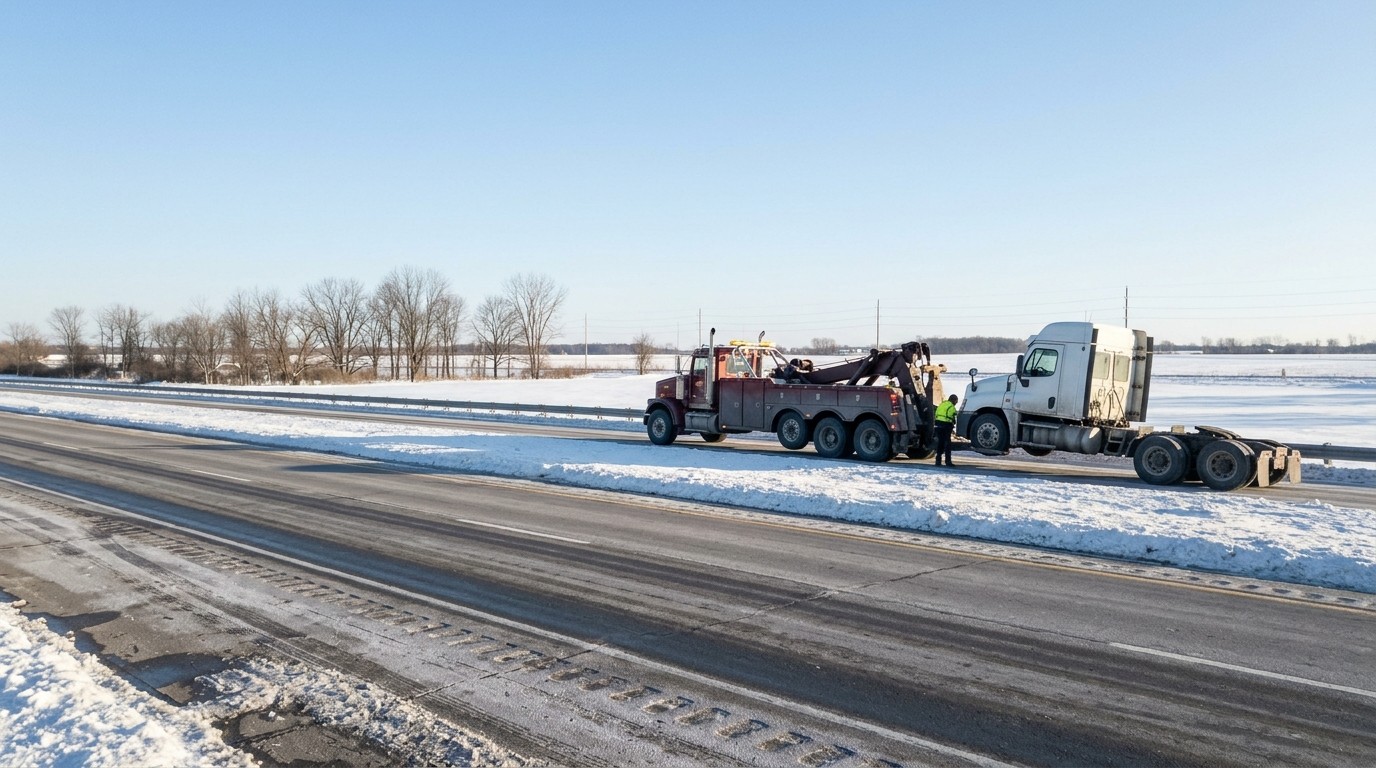

  • Most Dangerous Roads and Highways in Erie County for Breakdowns

    Most Dangerous Roads and Highways in Erie County for Breakdowns

    Erie County sits at one of the busiest transportation crossroads in the northeastern United States, a major commercial freight corridor, a border crossing point, and a region that takes a serious beating from Lake Erie weather every winter. According to a recent Allstate report, Buffalo’s accident rate hovers more than 33% above the national average. For drivers and fleet operators, that means breakdowns and roadside incidents are not a matter of if. They’re a matter of when, and where. Some roads in Erie County are significantly more hazardous than others, whether due to high traffic volume, poor visibility, harsh weather conditions, or a combination of all three. Here’s a breakdown of the roads and highways in the area that see the most incidents, and what to do if something goes wrong on any of them.

    Short answer: The riskiest roads for breakdowns in Erie County are I-90, I-190 and Route 33, plus busy city streets like Niagara Falls Boulevard, Delaware Avenue, William Street and Bailey Avenue. On any of them: get as far off the road as you can, hazards on, stay buckled in if traffic is close, and call (716) 923-7804, 24/7.

    I-90: The New York State Thruway

    I-90 is the backbone of freight movement across Western New York, running east-west through Erie County and carrying a constant mix of commercial trucks, passenger vehicles, and interstate traffic. I-90 near Buffalo is one of the most dangerous highway segments in the country during winter, with lake-effect conditions and dense metro interchanges where freight and passenger traffic converge, conditions that can strip pavement friction in minutes. For commercial truck drivers, a breakdown on I-90 is especially serious, high-speed traffic, limited shoulder space in some sections, and heavy freight volume all make getting off the road quickly critical. If your semi, bus, or commercial vehicle goes down on I-90, getting the right heavy duty towing response dispatched as fast as possible is the priority, not attempting anything on the shoulder.

    I-190: The Niagara Thruway

    I-190 runs north-south from I-90 in Buffalo up to the Canadian border at Lewiston, near Niagara Falls, passing through the Peace Bridge border crossing area and Grand Island along the way. This corridor sees a unique traffic mix, cross-border commercial freight, tourist traffic heading to Niagara Falls, and local commuter volume. The stretch running over the Grand Island bridges is particularly exposed to wind and winter weather, making it one of the more challenging sections of road in the county for vehicles in any condition. A breakdown on the bridge or in the Peace Bridge approach area needs fast response, limited shoulder space and heavy traffic make it a dangerous place to sit for long.

    Route 33: The Kensington Expressway

    Route 33’s westernmost section through Buffalo and Cheektowaga has been upgraded into the Kensington Expressway, serving as a main route to Buffalo Niagara International Airport. That airport connection means Route 33 sees consistent high-speed traffic at all hours, including a significant volume of commercial vehicles and rental trucks. The expressway sections offer limited opportunities to exit safely during a breakdown, and merging traffic from ramps creates additional hazards. If you break down on Route 33, getting as far onto the shoulder as possible before stopping is critical, staying in a travel lane on this road, even briefly, is a serious risk.

    Niagara Falls Boulevard

    Niagara Falls Boulevard is surrounded by commercial establishments and a large shopping mall, and sees heavy commuter traffic on any given day. Police report factors including poorly marked pedestrian crosswalks, inadequate lighting, and speeding, with one-fifth of motorists regularly exceeding the road’s posted speed limit of 45 miles per hour. For drivers experiencing a breakdown on Niagara Falls Boulevard, the combination of high traffic density and frequent pedestrian activity makes it one of the trickier roadside situations in the county. A flat tire or dead battery here can quickly become a hazard for everyone around you.

    Delaware Avenue

    The Delaware Avenue and Chippewa intersection sees significant traffic volume, turning vehicles, and pedestrian crossings, with the convergence of multiple roads and high foot traffic increasing the likelihood of collisions, especially at night and on weekends. Further along Delaware Avenue into the northern suburbs, the road carries heavy commuter traffic, and winter conditions regularly make stopping distances unpredictable. Roadside assistance calls on Delaware Avenue, for jump starts, flat tires, and lockouts, are common throughout the year.

    William Street and Bailey Avenue

    William Street and Bailey Avenue are among the 10 roads with the highest accident rates in Buffalo. These are high-volume local corridors where commercial vehicles, delivery vans, and everyday traffic share lanes with pedestrians and cyclists. Vehicle breakdowns on these streets disrupt traffic flow significantly, and the density of surrounding activity means getting off the road quickly, even just pulling into a nearby lot, is important before calling for help.

    What to Do If You Break Down on Any of These Roads

    Regardless of which road you’re on, the steps are the same. Get your vehicle as far off the travel lane as possible, activate your hazard lights immediately, and if you have reflective triangles or flares, set them out to warn approaching traffic. Stay in a safe position, inside the vehicle if you’re in an active lane or high-speed area, or well away from traffic if you’ve stepped out. Then call for help right away, with your location, vehicle type, and a brief description of the problem ready.

    The type of help you need depends on the situation, a flat tire, a dead battery, or an empty tank can all be handled roadside without a tow. A mechanical failure, accident damage, or a vehicle that won’t move at all typically needs towing. For commercial vehicles like semis and buses, heavy duty towing is the only safe option on roads like I-90 and I-190, where standard tow trucks aren’t built for the weight and size of the job.

    How to Tell Us Where You Are

    The quickest way for a tow truck to find you is a clear location:

    • The road and your direction, like “I-90 eastbound” or “I-190 northbound”
    • The nearest exit number or mile marker
    • Anything you just passed: a bridge, a ramp, a rest area or a business sign
    • On city streets, the nearest cross street or a business name
    • A pin from your phone’s map app, if you can send one

    Not sure where you are? Say what you see. A good description saves time.

    Winter Driving Tips for Erie County

    • Slow down early on bridges and ramps; they freeze first
    • Leave extra space behind trucks and plows
    • Keep at least half a tank of fuel in winter
    • Carry a blanket, an ice scraper, a small shovel and a phone charger
    • If you slide off the road, stay in the vehicle, and keep the tailpipe clear of snow if you run the engine for heat

    We Respond Across Erie County: Day and Night

    Moss Heavy Duty Towing covers all of the roads listed in this post, from I-90 and I-190 to Niagara Falls Boulevard, Route 33, and local Buffalo streets, providing heavy duty towing, light duty towing, and roadside assistance including flat tire changes, jump starts, fuel delivery, and lockout service. Wherever you break down in Erie County, our team is ready to respond day and night. Call (716) 923-7804 for professional help.

    Frequently Asked Questions

    What should I do if I break down on the Kensington Expressway?

    Get as far onto the shoulder as you can, turn on your hazards and stay buckled in. Traffic on Route 33 moves fast. If you’re stopped in a travel lane, call 911 first, then call us.

    Do you cover city streets as well as highways?

    Yes. We tow and help drivers on the highways and on city streets across Buffalo and Erie County.

    Can you tow heavy trucks off the Thruway?

    Yes. Our heavy duty wreckers handle semis, buses and other large vehicles on I-90, I-190 and Route 33.

    Are you open 24/7?

    Yes. Call (716) 923-7804 any time, day or night, weekends and holidays.

    Related Services

    Broke Down in Erie County?

    (716) 923-7804, 24/7. Or send a quote request and we’ll call you back.

  • What to Do When Your RV or Motorhome Breaks Down in Western New York

    What to Do When Your RV or Motorhome Breaks Down in Western New York

    A road trip through Western New York in your RV or motorhome should be one of the most enjoyable experiences on the road, open highways, scenic stretches along Lake Erie, and easy access to destinations like Niagara Falls and the surrounding region. But when something goes wrong with your motorhome on I-90, I-190, or Route 33, the situation can feel overwhelming fast. RVs and motorhomes are large, heavy vehicles that most standard towing companies aren’t equipped to handle, and being stranded far from home in one makes a breakdown feel even more stressful than usual. This guide walks you through exactly what to do, step by step, when your RV or motorhome breaks down in the Buffalo and Erie County areas.

    Short answer: Get the RV fully off the road, hazards and triangles out, and stay inside if you’re near traffic. Tell the tow company the class and length of your motorhome, gas or diesel, and whether you’re towing a car or trailer. Large RVs need medium or heavy duty equipment, not a standard tow truck. Call (716) 923-7804, 24/7.

    Step 1: Get Your RV Off the Road Safely

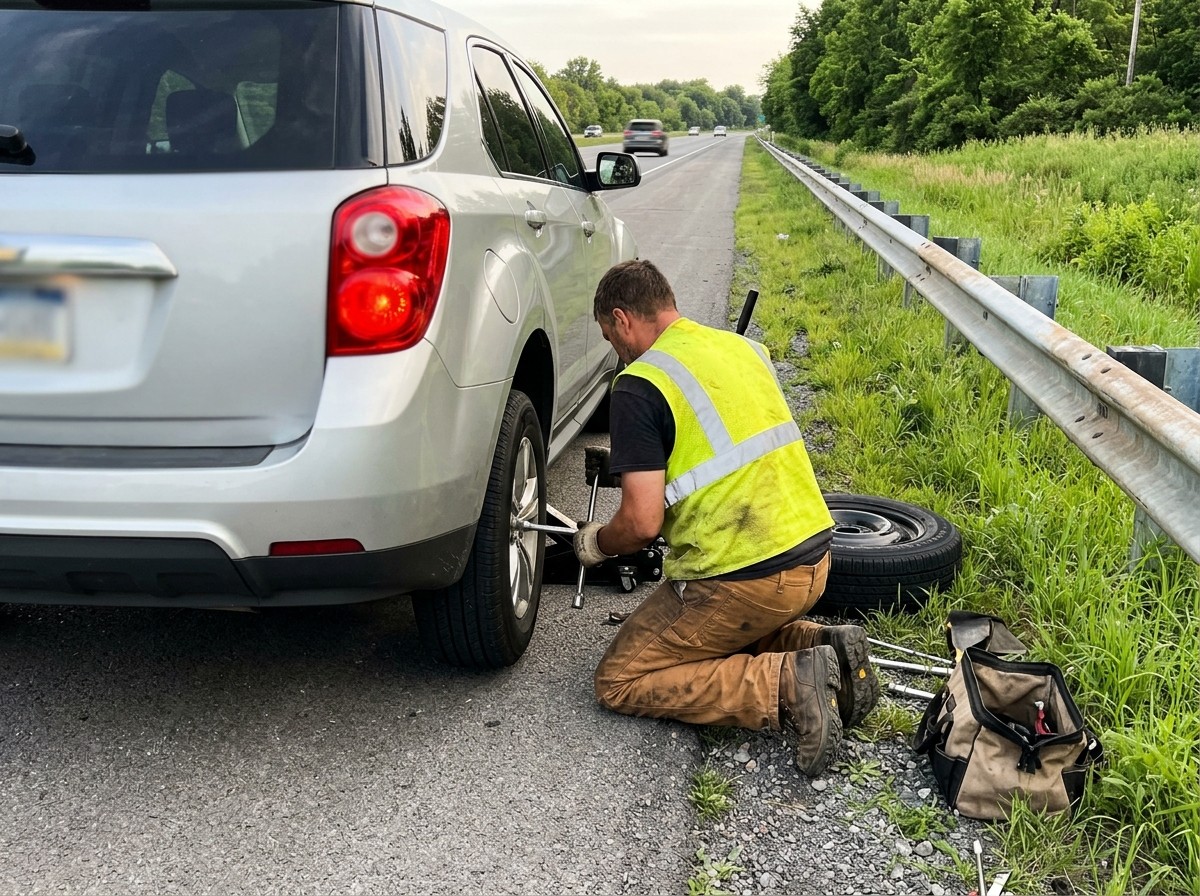
    Your first priority when something goes wrong is getting your vehicle off the travel lanes as quickly and safely as possible. If your motorhome is still moving, even slowly, guide it onto the shoulder, as far from the travel lanes as you can manage. Class A motorhomes and larger RVs are wide vehicles, so make sure you’re fully clear of the white line before stopping. Turn your hazard lights on immediately, and if you’re carrying reflective triangles or road flares, set them out behind your vehicle to give approaching traffic as much warning as possible. A large RV parked on the shoulder is more visible than a car, but faster-moving highway traffic still needs time to react.

    Step 2: Stay Safe While You Wait

    Once your vehicle is stopped and hazard lights are on, think carefully about where you and your passengers should be. In most situations, staying inside the motorhome is safer than standing outside near traffic, your RV’s size actually offers some protection in that regard. If you’re in a spot with a wide shoulder and you feel safe stepping out, stay on the side of the vehicle furthest from traffic and well away from the rear. If you have pets or children with you, keep them secured inside until help arrives. Avoid standing behind the vehicle, rear-end approaches by distracted drivers are one of the most common secondary incident types in roadside situations.

    Step 3: Assess the Situation Without Making It Worse

    While waiting for help, a basic visual assessment can be useful, checking for a flat tire, visible fluid leaks underneath the vehicle, or an overheating warning on your dashboard. This helps you describe the problem accurately when you call for towing. However, avoid attempting repairs on the highway shoulder yourself unless you’re dealing with something very straightforward, like checking a fuse. RVs and motorhomes are complex vehicles, and an incorrect roadside fix attempt can sometimes cause additional damage or create a safety risk.

    Step 4: Call for the Right Kind of Help

    This is where many RV breakdowns get more complicated than they need to be. Not every towing company is equipped to handle a motorhome or RV, standard light duty tow trucks aren’t built for the weight and size of a Class A or Class C motorhome. Calling the wrong company can mean a long wait, only to be told on arrival that they can’t actually tow your vehicle. When you call, make sure to clearly describe your vehicle, the class of motorhome, approximate length, whether it’s a gas or diesel pusher, and whether you’re towing a trailer or vehicle behind it. This allows the towing company to dispatch the right equipment the first time rather than arriving unprepared.

    Moss Heavy Duty Towing provides medium duty towing for motorhomes and RVs across Erie County, equipped to handle these vehicles with the care needed to avoid damage during towing.

    Step 5: Know What Information to Have Ready

    When you call for help, having the following information ready speeds the whole process up significantly:

    • Your exact location: mile marker, exit number, or the nearest highway sign
    • The direction you’re traveling
    • Your RV class and approximate length
    • Whether you have a toad (a vehicle being towed behind your motorhome)
    • A description of what went wrong: tire, engine, electrical, etc.
    • The number of passengers, including pets, so the towing company knows what to expect on arrival

    Step 6: Deal With Your Toad or Trailer

    If you’re towing a vehicle or trailer behind your motorhome, common with Class A drivers especially. This adds a layer of complexity to the towing process. In many cases, the toad or trailer will need to be disconnected and handled separately. Let the towing company know about it when you call, so they can plan for the additional equipment or vehicles involved. Trying to tow a motorhome with a car still attached behind it isn’t something most towing setups can safely handle.

    Step 7: Plan for Where Your RV Goes

    Unlike a passenger car breakdown where the nearest auto shop is usually a straightforward option, motorhome and RV repairs require a service facility equipped for large vehicles. Before or while you’re waiting for the tow, it’s worth thinking about where you want the vehicle taken. If you’re traveling through the Buffalo area and don’t know local repair options, a quick search for RV service centers in Erie County can help you give the towing company a destination. Having a destination ready avoids delays once your motorhome is loaded up and ready to move.

    Common RV Breakdown Situations in Western New York

    A few specific situations come up more often than others for RV travelers passing through Buffalo and Erie County:

    • Tire blowouts: RV tires carry significant weight and can fail without much warning, especially in summer heat on long highway stretches. A blowout on I-90 needs careful management given the size of the vehicle.
    • Overheating: especially with older or heavily loaded Class A motorhomes climbing grades or sitting in slow traffic during summer months.
    • Dead batteries: both engine batteries and house batteries can cause issues, and diagnosing which is the problem isn’t always straightforward.
    • Getting stuck: RVs have a higher chance of getting stuck on soft ground in rest areas, campgrounds, or pull-offs, particularly after rain.

    Before You Leave: An RV Breakdown Kit

    • Reflective triangles or flares
    • A tire pressure gauge and the right pressures for your RV (often on a sticker near the driver’s seat)
    • Your roadside plan or insurance card and policy number
    • Your RV’s length, height and weight written down for the tow company
    • A flashlight, gloves and a charged phone power bank
    • Water, snacks and any medicine everyone on board needs

    Western New York Weather and RVs

    Lake Erie can change the weather quickly. Strong crosswinds on open stretches of the Thruway can push a tall motorhome around, and lake-effect snow can arrive with little warning from late fall into spring. If wind or snow makes driving hard, pull off at a rest area or an exit early instead of waiting for a problem. In summer, long climbs and slow traffic are hard on tires, brakes and cooling systems, so check tire pressure and coolant before a long drive.

    Get Help Fast When You Need It

    Breaking down in a motorhome far from home is stressful, but following these steps keeps you safe and gets the right help on the way as quickly as possible. The key is staying calm, getting off the road safely, and calling a towing company that’s actually equipped for RVs and motorhomes, not one that will show up and tell you they can’t handle the vehicle.

    Moss Heavy Duty Towing provides medium duty towing for RVs and motorhomes throughout Buffalo and Erie County, covering major routes like I-90, I-190, and Route 33, day and night. If your motorhome has broken down in the Western New York area, call (716) 923-7804 for professional help.

    Frequently Asked Questions

    Can you tow a Class A motorhome?

    Yes. Large motorhomes need heavy duty equipment, and smaller Class B and C motorhomes can often go on medium duty equipment. Tell us the class and length when you call.

    What happens to the car I’m towing behind my RV?

    Usually it’s unhooked first and driven or towed separately. Tell us about it when you call so we can plan for both.

    Can you take my RV to an RV repair shop?

    Yes. Give us the shop’s name or address and we’ll take it there.

    Are you open 24/7?

    Yes. Call (716) 923-7804 any time, day or night, weekends and holidays.

    Related Services

    RV Broke Down? Call Now.

    (716) 923-7804, 24/7. Or send a quote request and we’ll call you back.

  • What to Do If Your Semi or Commercial Truck Breaks Down: A Complete FAQ

    What to Do If Your Semi or Commercial Truck Breaks Down: A Complete FAQ

    A commercial vehicle breakdown on the highway is one of the most stressful situations a driver can face, especially on high-traffic corridors like I-90, I-190, or Route 33 in and around Buffalo. Between safety concerns, lost time, and the pressure of getting a load or route back on schedule, it’s easy to feel overwhelmed in the moment. This guide answers the most common questions drivers and fleet managers ask when a semi-truck, bus, or other commercial vehicle goes down, so you know exactly what to do before help arrives.

    Short answer: Get the truck as far right as you can, hazards on, triangles out, and stay with the cab if you’re near a live lane. Tell the tow company your exact location, the truck and trailer type, whether it’s loaded, and what happened. A heavy duty wrecker handles the tow or recovery. Call (716) 923-7804, 24/7.


    What’s the first thing I should do if my truck breaks down on the highway?

    Your first priority is safety, not the truck itself. If your vehicle is still drivable even slightly, get it as far onto the shoulder as possible, ideally past the white line and away from the traffic lanes. Turn on your hazard lights immediately, and if you’re carrying reflective triangles, set them out behind your vehicle according to standard spacing (typically 10, 100, and 200 feet back) to warn approaching traffic. If you’re on a narrow shoulder or in a high-speed zone, stay inside the cab with your seatbelt on rather than standing outside near traffic.


    Should I try to diagnose the problem myself, or wait for help?

    It depends on your comfort level and the situation. A quick visual check, looking for a blown tire, obvious fluid leaks, or a warning light you recognize, can help you describe the problem accurately when you call for towing. But unless you’re confident and it’s safe to do so, avoid climbing underneath the vehicle or attempting repairs on the shoulder of a busy highway. The goal is to get accurate information to whoever you call, not to fix the problem roadside.

    What information should I have ready when I call for help?

    Being prepared speeds up the whole process. Try to have the following ready:

    • Your exact location: mile marker, exit number, or nearby landmark
    • The direction you’re traveling
    • Vehicle type (semi, box truck, bus, etc.) and whether it’s attached to a trailer
    • A brief description of the issue (won’t start, tire blowout, overheating, etc.)
    • Whether the vehicle is fully off the road or partially blocking a lane

    The more specific you can be, the faster a tow operator can bring the right equipment for your situation.

    What if my truck is blocking a lane of traffic?

    If your vehicle can’t be moved out of a travel lane, treat it as an emergency. Keep your hazard lights on, use triangles or flares if you have them, and stay in a safe position, ideally away from the vehicle itself, on the side furthest from traffic, if you can get there safely. In situations where your truck is blocking traffic, it’s also worth notifying local authorities in addition to calling for towing, since law enforcement may need to help manage traffic flow around the scene.

    My trailer is loaded: does that change anything?

    Yes. A loaded trailer adds weight and can shift the vehicle’s balance, especially if you’ve had a tire blowout or you’re on uneven ground. Avoid unnecessary movement of the vehicle once it’s stopped, and let whoever you call know that you’re loaded, along with an approximate weight if you know it. This helps ensure the right recovery equipment is dispatched, particularly if the truck needs to be winched, righted, or towed rather than simply hooked up and pulled.

    What’s the difference between a simple tow and a recovery situation?

    A standard tow applies when your vehicle is upright, off the road, and just needs to be transported, for example, after an engine failure or electrical issue. A recovery situation is more involved: a rollover, a jackknifed trailer, or a vehicle stuck in a ditch or off-road area all require different equipment and techniques, like winching or specialized rigging, to move the vehicle safely without causing further damage. If you’re not sure which category your situation falls into, describe what happened as clearly as you can, the tow operator can usually tell from your description which type of response to send.

    Does winter weather change how I should handle a breakdown?

    Significantly, especially in a region like Buffalo that sees heavy lake-effect snow. Cold temperatures increase the odds of dead batteries, and icy shoulders raise the risk of vehicles sliding further off the road or into a ditch. If you break down in winter conditions, staying inside your vehicle (if it’s safe to do so) helps protect you from exposure while you wait. Keep your hazard lights on, and if visibility is poor, extra caution is needed when placing triangles or exiting the vehicle at all.

    How long will it take for help to arrive?

    Response times vary depending on your location, traffic, and weather conditions. When you call, we give you an honest arrival time. Giving an accurate location up front is the single biggest factor in getting help to you quickly.


    What should I do while I wait?

    Stay safe first. That means staying buckled in your cab if you’re in a live traffic lane, or standing well clear of the road if you’ve stepped out. Keep your phone charged if possible, since the tow operator may call back to confirm details or give you an updated arrival estimate. Avoid standing directly behind or in front of your vehicle, since it’s a common spot for secondary collisions if another vehicle doesn’t see you in time.

    Do I Need a Heavy Duty Wrecker or a Rotator?

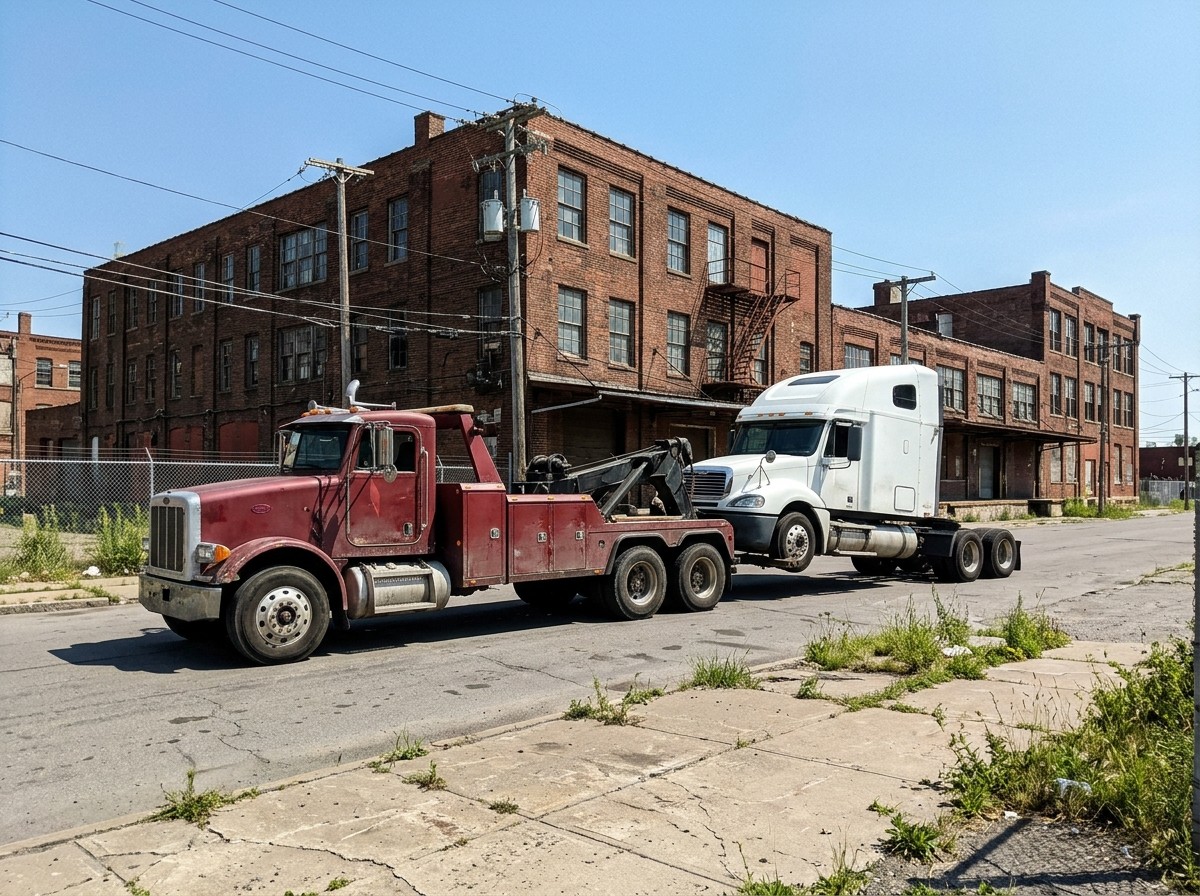
    Most semi breakdowns, like engine, transmission or air system failures, need a heavy duty wrecker that lifts the front of the truck and tows the rig. A rotator is a wrecker with a crane-like boom that turns, used for rollovers, jackknifes and trucks that went off the road. You don’t need to know which one to ask for. Describe what happened and how the truck is sitting, and the tow company sends the right equipment.

    Before the Wrecker Arrives: A Quick Checklist

    • Hazard lights on, and warning triangles set out behind the truck
    • Mile marker or exit and your direction of travel written down
    • Bill of lading and trailer number ready
    • Note anything special about the load: hazmat, refrigerated, oversize or very heavy
    • Your dispatcher and fleet manager told about the breakdown
    • You and any passengers off the traffic side of the rig

    Stay Safe, Get Moving Again

    Commercial breakdowns are stressful, but knowing what to expect, and having the right information ready, makes a real difference in how quickly and safely the situation gets resolved. Moss Heavy Duty Towing responds to semi-truck, bus, and commercial vehicle breakdowns throughout Buffalo and Erie County, including major routes like I-90, I-190, Route 33, and the Peace Bridge border crossing, day and night. If you’re dealing with a breakdown right now, call (716) 923-7804 for professional heavy duty towing.

    Frequently Asked Questions

    Can you tow a semi with the trailer attached?

    Often, yes, if the trailer is in good shape and the load is secure. Sometimes it’s safer to move the cab and the trailer separately. Tell us what you’re hauling and roughly how heavy it is, and we’ll plan the tow.

    Do you need my bill of lading?

    It helps. It tells us what the load is and roughly how heavy it is, which matters for the equipment and for handling the cargo.

    Are you open 24/7?

    Yes. Call (716) 923-7804 any time, day or night, weekends and holidays.

    How much does a semi tow cost?

    It depends on the truck, the load, the distance and whether recovery is needed. Call and we’ll give you a quote on the phone.

    Related Services

    Semi Broke Down? Call Now.

    (716) 923-7804, 24/7. Or send a quote request and we’ll call you back.